Digital Marketing Agency Classification Criteria 2026: Types, Tiers & How to Choose

What Are Agency Classification Criteria?
Agency classification criteria refer to a set of standards and characteristics used to evaluate and categorize digital marketing agencies within the ever-evolving landscape of online marketing. These criteria provide a framework for businesses to identify and select agencies that align with their specific needs and objectives. Understanding how these agencies are classified is vital for organizations intending to enhance their marketing efforts through collaboration.
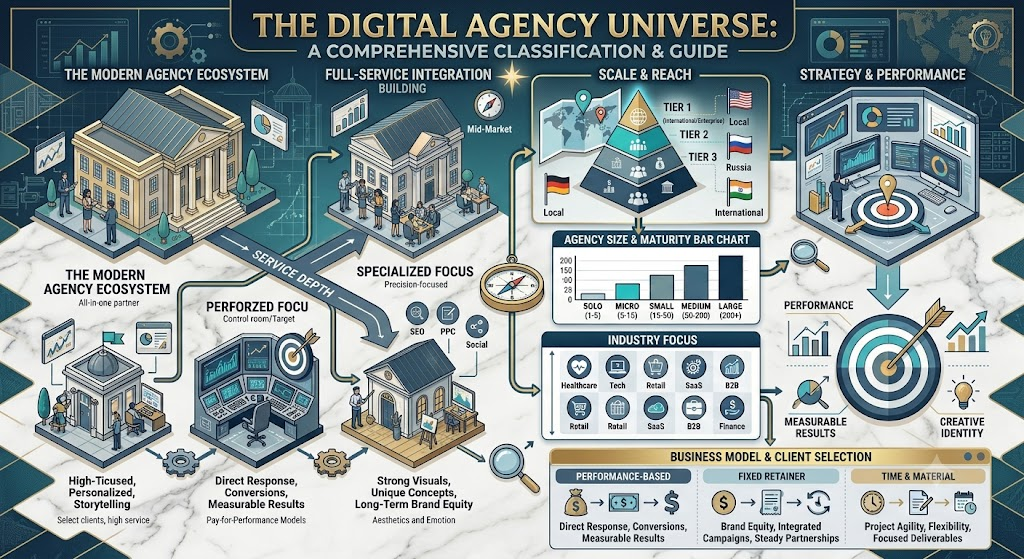
Digital marketing agencies can be classified based on various factors, including their core capabilities, methodologies utilized, areas of specialization, target industries, and geographic reach. For instance, some agencies may focus primarily on search engine optimization (SEO), while others might excel in social media management or content marketing. This specialization enables businesses to identify agencies best suited for their particular marketing goals.
Furthermore, methodologies employed by agencies play a significant role in their classification. Some may adopt a data-driven approach, utilizing analytics and insights to inform their strategies, while others might prioritize creativity and brand storytelling. Understanding these methodologies can help businesses select an agency that not only understands their brand but also complements their operational style and goals.
The importance of these classification criteria extends beyond aiding clients in choosing the right marketing partner. For agencies, clearly defining their specializations and methodologies allows for more effective positioning within the marketplace. This clarity strengthens their brand identity and attracts potential clients seeking specific services.
Overall, comprehending agency classification criteria is invaluable for both businesses and agencies involved in the digital marketing ecosystem. By navigating these criteria effectively, companies can ensure a productive partnership that maximizes their marketing investment, and agencies can refine their offerings to meet the particular demands of the industry.
Classification by Service Type
Digital marketing agencies can be classified based on the various services they offer. This classification is crucial for clients as it allows them to identify an agency that aligns with their specific marketing needs. The primary service types typically include search engine optimization (SEO), content marketing, social media management, pay-per-click (PPC) advertising, and comprehensive digital strategy development.
SEO focuses on enhancing a website’s visibility on search engines like Google. Agencies specializing in SEO provide services that include keyword research, on-page optimization, link building, and technical SEO. Their goal is to improve the organic search rankings of their clients, thereby increasing website traffic.
Content marketing agencies prioritize the creation and distribution of valuable content to attract and engage a target audience. This service type encompasses blog writing, video production, and infographic design, all aimed at driving customer engagement. A well-executed content marketing strategy can not only boost brand awareness but also foster customer loyalty.
Social media management involves managing a brand’s presence on social media platforms. Agencies in this category handle activities such as content creation, post scheduling, engagement with followers, and analytics reporting. A robust social media strategy helps brands to connect with their audiences and enhance their online reputation.
PPC advertising agencies focus on creating and managing paid ad campaigns across platforms like Google Ads and Facebook Ads. They are adept at utilizing data analytics to optimize ad performance and return on investment.
Lastly, some agencies provide a wide-ranging digital strategy service that encompasses various marketing disciplines. These agencies offer a holistic approach, tailoring solutions based on clients’ objectives and market dynamics.
Understanding these service types is essential for businesses looking to partner with the right digital marketing agency. Each classification reflects specific expertise, ensuring that clients can effectively align their marketing strategies with competent agency offerings.
Classification by Client Size
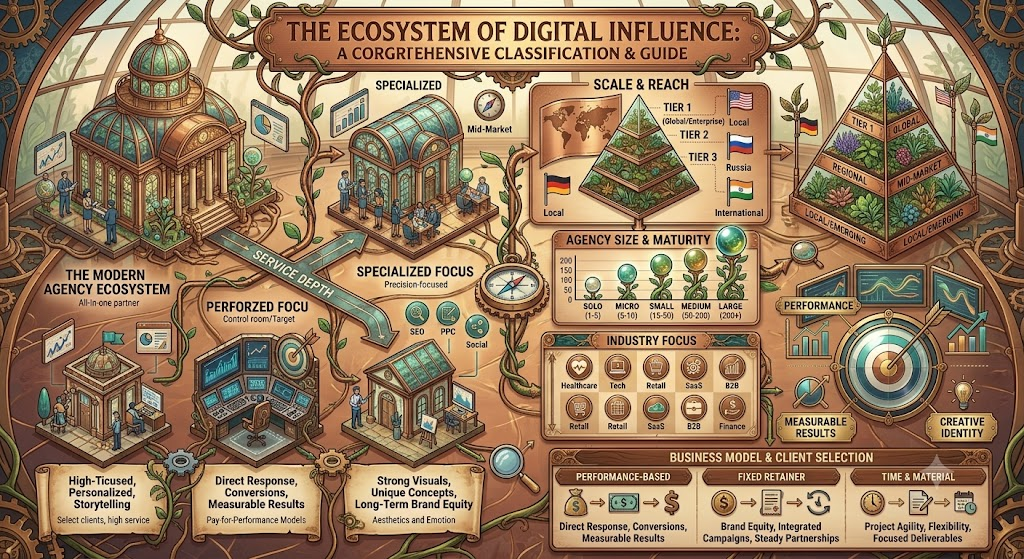
Digital marketing agencies are often classified based on the size of their clients, which can significantly influence the agency’s strategies, operations, and client relationships. Broadly, these agencies can be categorized into three groups: those serving small businesses, mid-sized companies, and large enterprises.
Agencies that cater to small businesses typically focus on building foundational strategies with limited budgets. These agencies often offer a range of essential services, including search engine optimization (SEO), social media marketing, and local marketing. The unique challenge in this sector often revolves around resource constraints. Small business clients may seek high-impact marketing techniques that yield maximum visibility without substantial financial investment. Hence, agencies in this category must adopt highly tailored, cost-effective strategies to achieve meaningful results.
Mid-sized companies require a bit more complexity in their marketing strategies. Agencies serving this group often provide an extensive array of services that encompass digital advertising, content marketing, and web development. Here, the challenge shifts from budget constraints to scalability. Agencies must refine their approaches to ensure that the marketing solutions offered can adapt as the client grows. This requires a deep understanding of mid-market dynamics to craft strategies that effectively engage broader audience segments.
Finally, agencies that target large enterprises deal with even more considerable challenges, including intricate decision-making processes and multiple layers of communication channels. Large corporations typically have established marketing departments that expect high levels of sophistication and data-driven results. Consequently, agencies must navigate corporate structures and often require advanced analytics to measure campaign success effectively. This classification reflects not only the diverse client needs but also the distinct tactical methodologies required to engage each segment successfully.
The Importance of Understanding Agency Classification Criteria
In today’s highly competitive business landscape, selecting the right digital marketing agency is crucial for achieving sustained success. Understanding agency classification criteria provides organizations with a clear framework to assess potential partners effectively. By gaining insights into different classifications of agencies, businesses can make informed choices that align with their specific operational needs and marketing objectives.
One significant advantage of comprehending these classification criteria is the clarity it brings regarding the capabilities of various agencies. Different categories of digital marketing firms specialize in diverse services, such as search engine optimization, content marketing, social media management, and more. Recognizing where an agency fits within this spectrum enables organizations to match their requirements with suitable partners, thereby enhancing the likelihood of achieving their marketing goals.
Furthermore, understanding agency classifications fosters strategic alignment between the services offered and a company’s objectives. When organizations select a digital marketing agency that specializes in a specific niche relevant to their industry, they are more likely to benefit from customized strategies designed to enhance their online presence. This alignment not only optimizes marketing efforts but also leverages the agency’s expertise, ensuring that campaigns resonate with target audiences effectively.
Moreover, improved communication often results from a mutual understanding of agency classifications. When both parties have a clear grasp of the agency’s roles, responsibilities, and values, misalignments are minimized. Clear communication channels facilitate better collaboration, ultimately leading to more productive partnerships.
Lastly, prioritizing agency classification when selecting a partner leads to long-term advantages. Doing so enables businesses to cultivate enduring relationships with agencies that grow alongside them, adapting strategies as their goals evolve. This foresight can be instrumental in positioning companies for ongoing success in the digital landscape.


[…] conclusion, TPOs serve as vital facilitators for religious organizations seeking financing. Their ability to tailor financial solutions, combined with their expertise in the sector, positions […]
[…] winter break, which will occur from December 22, 2026, to January 2, 2027. Following this period, classes will resume on January 3, 2027. Additionally, the mid-winter recess is scheduled for February 20 to February 24, 2027, […]