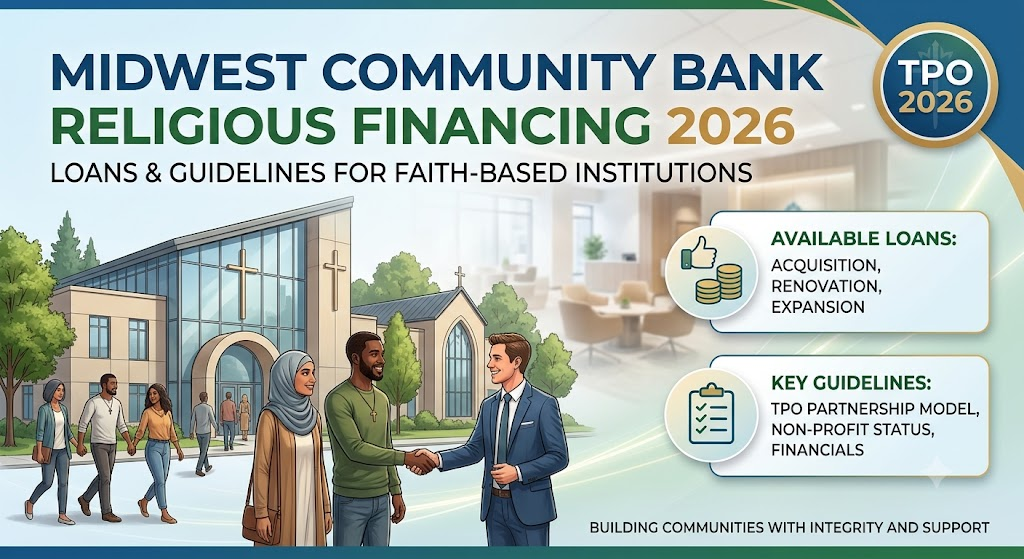
Midwest Community Bank Religious Financing TPO 2026: Loans & Guidelines

What is TPO for Religious Financing?
A Third Party Originator (TPO) plays a crucial role in the financing landscape for religious organizations, particularly in the Midwest. For churches and other religious institutions, acquiring financing can often present unique challenges. This is where TPOs come into play, acting as essential intermediaries between banks and the religious entities seeking funding. By fostering relationships with multiple financial institutions, TPOs facilitate access to a variety of financing products that best meet the specific needs of religious organizations.
The primary function of a TPO in this context is to streamline the loan application process. TPOs bring their expertise in religious financing, allowing them to understand and address the particular financial requirements of churches. They offer tailored solutions that can include various loan products like construction loans for new buildings, renovation loans for existing facilities, or operational loans to help manage cash flow. This tailored approach ensures that religious organizations can secure financing that aligns with their mission and community goals.
Utilizing TPO services can also enhance the overall efficiency of the financing process. Since TPOs have established relationships with multiple lenders, they can quickly compare and contrast various financing options, thereby saving valuable time for religious organizations. Their extensive knowledge of the banking environment and familiarity with the nuances of religious financing can result in faster approvals and more favorable terms, making them indispensable allies in the quest for funding.
In conclusion, TPOs serve as vital facilitators for religious organizations seeking financing. Their ability to tailor financial solutions, combined with their expertise in the sector, positions them as essential players in advancing the financial health of religious institutions in the Midwest.
Why Choose Midwest Community Banks?
Midwest community banks offer a distinct set of advantages particularly beneficial for religious organizations seeking financing. One of the primary reasons to consider these regional banks is their community-focused approach. Unlike larger financial institutions, Midwest banks prioritize the needs of their local communities, fostering a strong connection with residents, businesses, and organizations. This commitment to community enhances their understanding of the cultural and social values that are essential for functioning religious entities.
Community banks in the Midwest are often distinctly in tune with local needs and norms, which can be crucial for religious organizations that rely heavily on community support. These banks generally recognize the significance of churches and other religious entities as pillars of social integration, providing them with tailored financial solutions that reflect these organizations’ unique challenges and aspirations. Their localized knowledge equips them with the insights needed to offer reasonable terms that accommodate the operational models of various religious organizations.
Furthermore, the personalized service associated with Midwest community banks is a notable asset. Clients can expect direct interaction with decision-makers, which not only facilitates smoother communication but also leads to more informed and timely lending decisions specific to their financial needs. Community banks cultivate strong relationships with their clientele; this relationship-oriented model ensures ongoing support and adaptability to evolving financial landscapes, which is essential for the sustainability and growth of religious organizations.
In addition, these banks actively engage in community development initiatives, becoming partners in enhancing local welfare. By investing in local churches and religious organizations, Midwest community banks reinforce their commitment to community improvement and social responsibility. This dual focus on personalized interactions and community investment positions them as an optimal choice for religious organizations seeking financing in the region.
Loan Types for Churches
Community banks in the Midwest offer a range of loan types tailored specifically for churches, recognizing the unique financial needs and community-oriented missions of these organizations. Understanding the various financing options is crucial for religious organizations seeking to fund their projects or manage existing debts effectively.
One of the most common types of financing available is construction loans. These loans are designed to cover the costs associated with building new facilities or expanding existing structures. Typically, they come with short-term terms that allow churches to secure the necessary capital for construction, converting to a long-term mortgage upon completion. Community banks may require detailed plans regarding the project’s scope, budget, and timelines as part of the application process.
Another option is renovation loans. These are ideal for churches looking to upgrade or refurbish their existing buildings. Whether it’s updating the worship space, improving accessibility, or enhancing community services through additional facilities, renovation loans provide the financial backing necessary to realize these improvements. Applicants generally need to present estimates from contractors and a clear outline of the intended improvements.
Churches may also consider refinancing options to manage their financial health better. Refinancing allows religious organizations to consolidate debts, lower interest rates, or extend loan terms, thereby improving their cash flow. Community banks often evaluate the church’s financial history and current debt obligations when assessing eligibility for refinancing.
In summary, community banks in the Midwest offer diverse financing solutions tailored for churches, from construction loans to renovation and refinancing options. By understanding these loan types and their specific requirements, religious organizations can make informed decisions to secure the necessary funding to support their mission and community needs.
Conclusion and Best Practices for Securing Financing
In conclusion, securing financing for religious organizations in the Midwest is a multifaceted process that requires careful planning and strategic partnerships. Throughout this guide, we have explored the nuances associated with working alongside traditional community banks and leveraging Third Party Origination (TPO) services, both of which play crucial roles in facilitating financing solutions suitable for churches.
One of the foundational elements in the financing journey is the development of a robust relationship with local banks. Building rapport with community bank representatives can lead to more favorable terms and a deeper understanding of the bank’s lending criteria. Engaging with these financial institutions not only enhances trust but also ensures that your organization’s vision aligns with the bank’s community-oriented values.
Additionally, preparing a comprehensive financial plan is vital. This plan should clearly outline the religious organization’s mission, projected financial needs, and a detailed budget. Transparency in financial documentation can significantly improve the organization’s position when negotiating financing options. It is also advisable to have an ongoing dialogue with potential lenders, as this can further underscore the organization’s reliability and commitment.
Utilizing TPO services can further streamline the financing process. These services often provide a level of efficiency that is beneficial for religious organizations seeking to save time and resources. By outsourcing some aspects of the financing application process, religious leaders can focus more on their primary mission while ensuring that they have expert assistance in navigating complex lending landscapes.
By implementing these best practices—fostering relationships with local banks, preparing a solid financial plan, and effectively utilizing TPO services—religious organizations can enhance their chances of securing the financing they need to thrive in their communities. A proactive and informed approach is essential for accessing vital financial resources.


[…] is a comprehensive financial market data platform that serves as an invaluable resource for traders and investors seeking real-time information and […]